How to Wash and Care for Crochet Toys: A Complete Guide for Long-Lasting Amigurumi
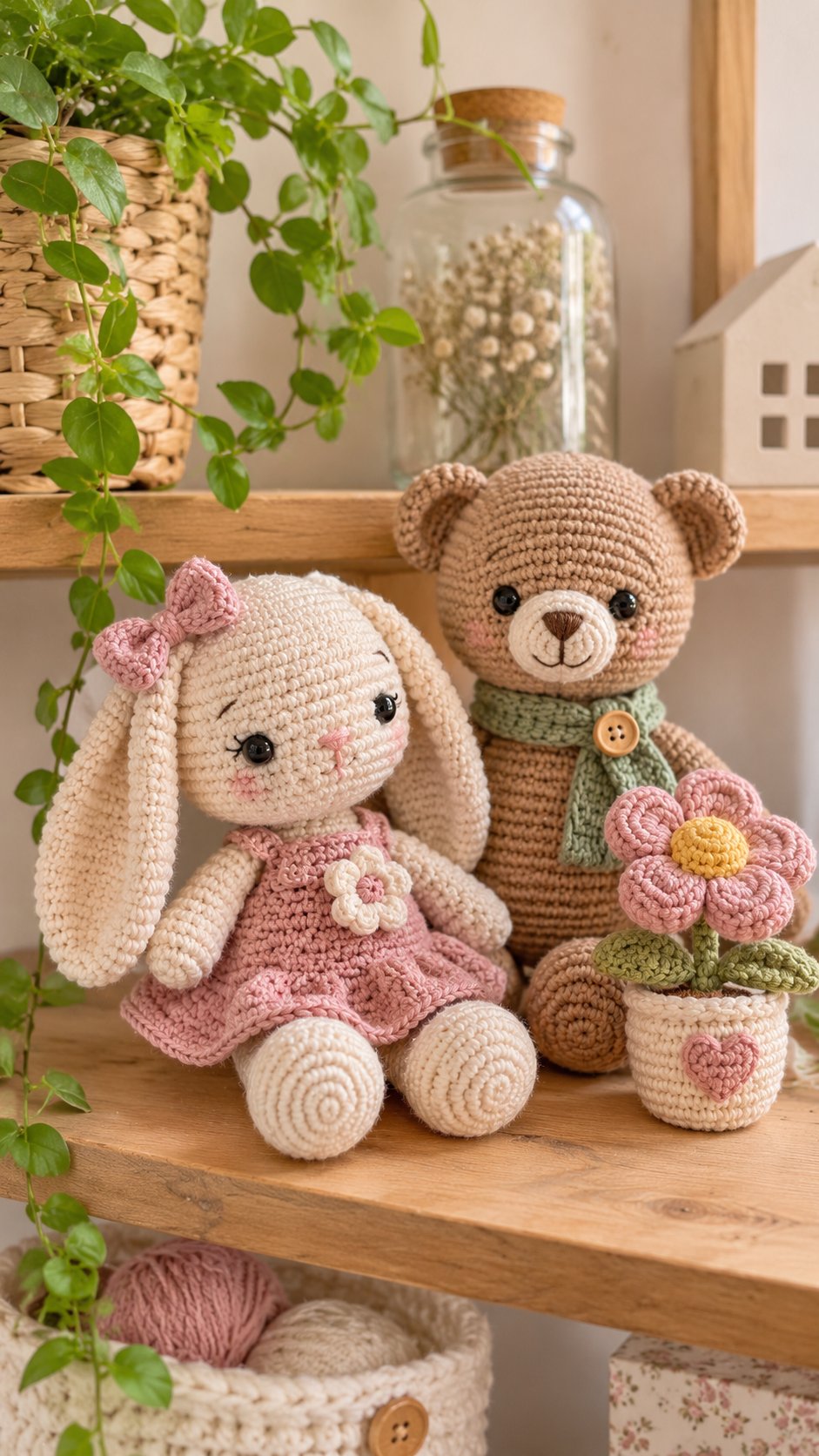
Crochet toys often become more than simple handmade projects. They sit on shelves, accompany children on daily adventures, travel inside bags, and sometimes become treasured gifts that are kept for years. Unfortunately, many crocheters spend hours creating beautiful amigurumi only to discover that improper cleaning causes the toy to lose its shape, become fuzzy, or develop loose stitches.
The good news is that most crochet toys can last for many years when cared for properly. The key is understanding how different yarns, stuffing materials, and decorative elements react to washing and everyday use.
In this guide, you’ll learn how to wash, dry, store, and maintain crochet toys so they stay clean, soft, and beautiful for as long as possible.
Why Crochet Toys Require Special Care
Unlike mass-produced plush toys, handmade crochet items are constructed stitch by stitch. Every increase, decrease, and sewn detail affects the final shape.
Because of this handmade construction, crochet toys can react differently to washing than fabric toys purchased from a shop.
Common problems include:
- Misshapen bodies
- Flattened stuffing
- Loose safety eyes
- Fuzzy yarn fibers
- Stretching
- Color bleeding
- Weak seams
Learning proper care techniques can prevent most of these issues before they happen.
Always Check the Yarn Type First
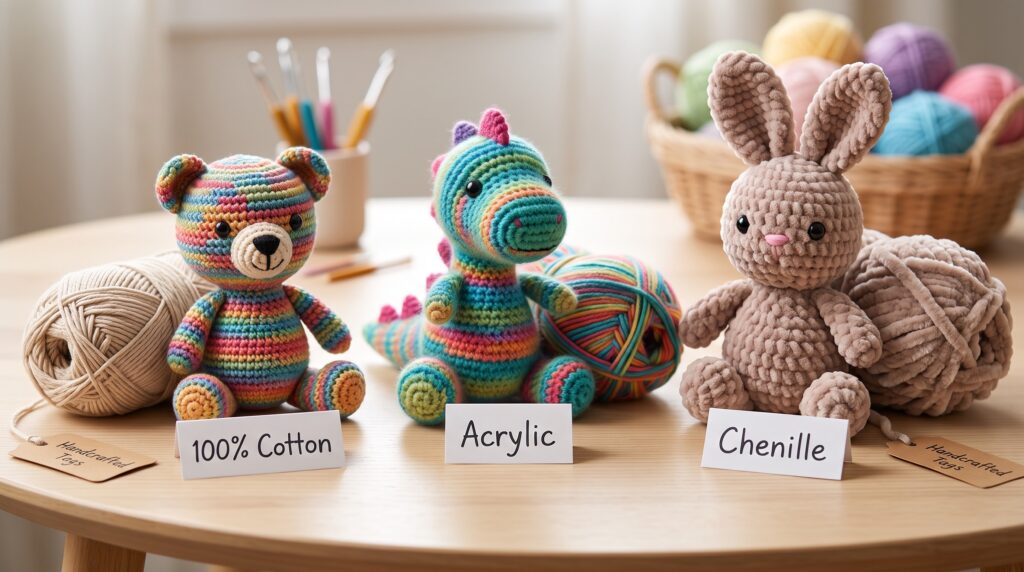
Before cleaning any crochet toy, identify what type of yarn was used.
Different fibers respond differently to water and heat.
Cotton Yarn
Cotton is one of the easiest fibers to maintain.
Benefits include:
- Durable structure
- Good stitch definition
- Less pilling
- Easy cleaning
Cotton toys usually handle gentle hand washing very well.
Acrylic Yarn
Acrylic yarn is popular because it is affordable and widely available.
However, acrylic can become fuzzy if exposed to excessive friction during washing.
Gentle handling helps preserve its appearance.
Chenille and Velvet Yarn
These soft plush yarns create beautiful textures but require extra care.
Harsh washing may damage the pile and reduce softness.
Always handle chenille projects carefully and avoid aggressive scrubbing.
How Often Should Crochet Toys Be Washed?
Not every crochet toy requires regular washing.
Display pieces may only need occasional dust removal.
Toys handled frequently by children may need more frequent cleaning.
As a general rule:
- Decorative toys: clean when visibly dusty.
- Children’s toys: clean as needed.
- Seasonal decorations: clean before storage.
Washing too often can sometimes cause more wear than occasional spot cleaning.
The Safest Cleaning Method: Hand Washing
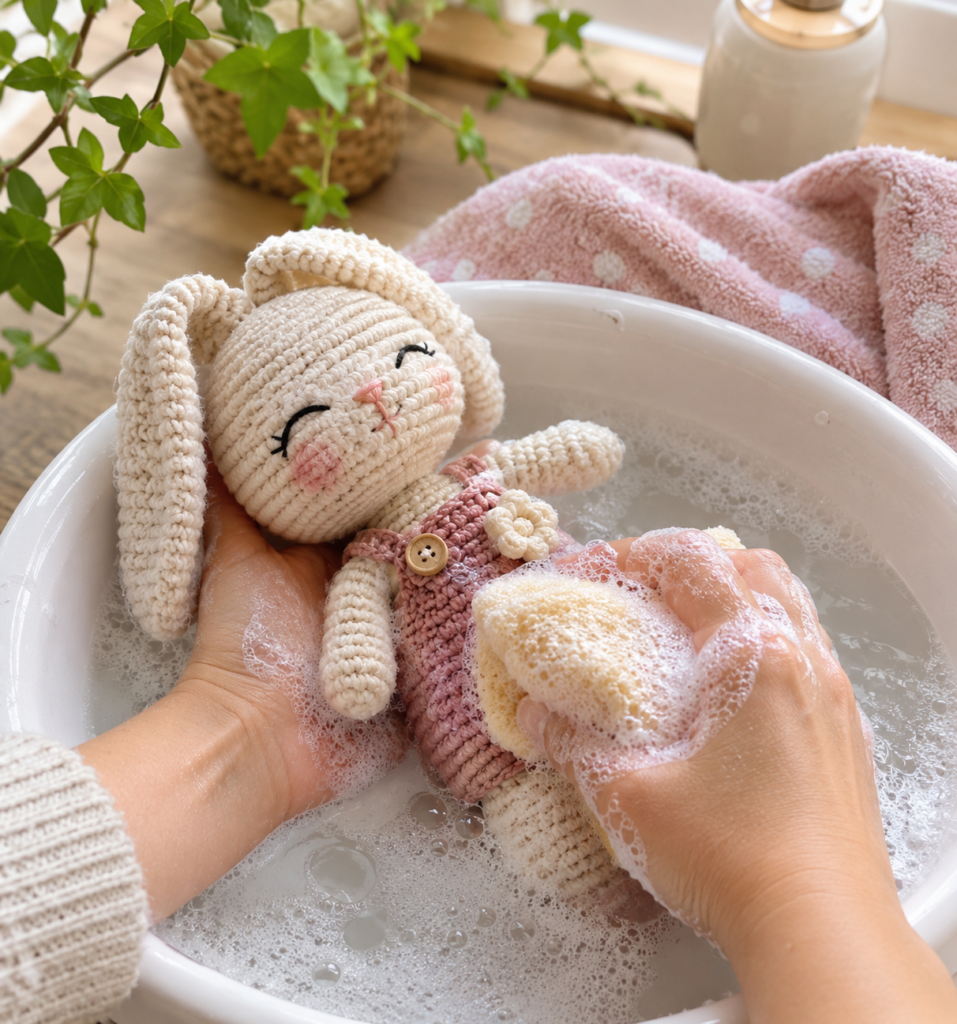
For most handmade crochet projects, hand washing remains the safest option.
Step 1: Fill a Basin with Cool Water
Use cool or lukewarm water.
Avoid hot water because some fibers may shrink or lose shape.
Step 2: Add Mild Soap
Choose a gentle detergent or baby shampoo.
Strong cleaning products may damage yarn fibers.
Step 3: Gently Submerge the Toy
Press the toy into the water carefully.
Do not twist, stretch, or wring the crochet fabric.
Allow it to soak for several minutes.
Step 4: Gently Clean
Use your fingertips to remove dirt from the surface.
Focus only on areas that need attention.
Avoid rubbing aggressively.
Step 5: Rinse Thoroughly
Rinse with clean water until all soap residue is removed.
Soap trapped inside the stuffing can attract dirt over time.
Can Crochet Toys Be Machine Washed?
Some crochet toys can survive machine washing, but it is not always recommended.
If machine washing is necessary:
- Place the toy inside a laundry bag.
- Use a delicate cycle.
- Choose cold water.
- Avoid heavy spinning.
Hand washing remains the safer choice whenever possible.
How to Dry Crochet Toys Properly
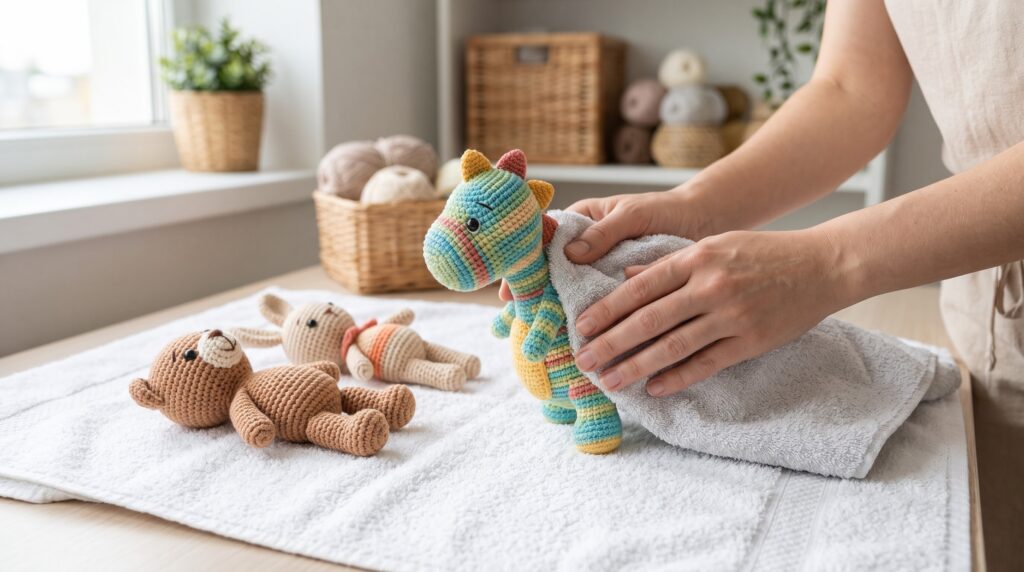
Drying is often more important than washing.
Many crochet toys become misshapen during the drying process.
Remove Excess Water
Instead of twisting the toy, gently press out water using a towel.
You can place the toy between two clean towels and apply light pressure.
Reshape Immediately
Before drying, gently shape:
- Head
- Body
- Arms
- Legs
- Ears
Taking a few minutes to reshape the toy can dramatically improve the final appearance.
Air Dry Flat
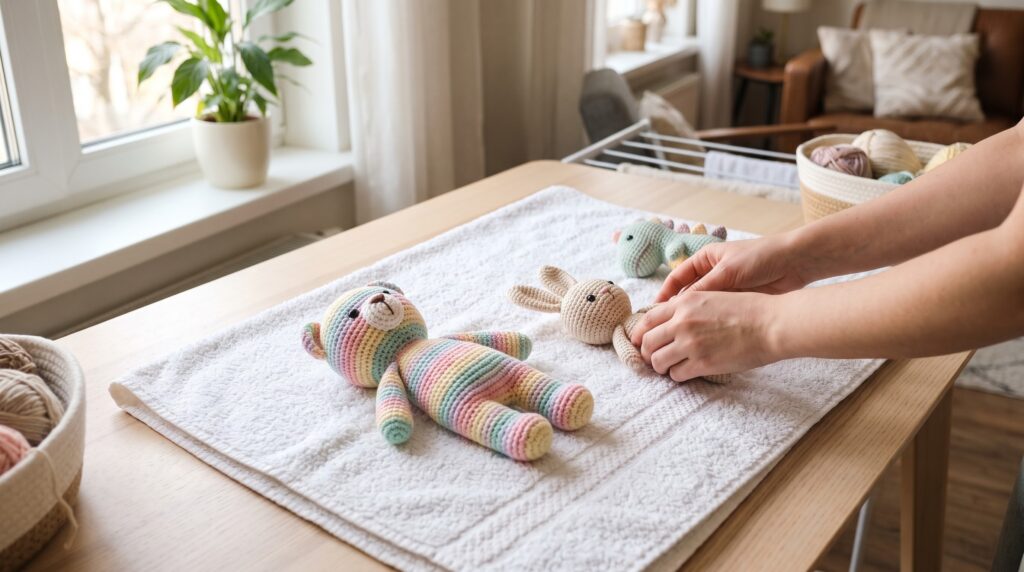
Lay the toy on a dry towel.
Allow air circulation around the project.
Avoid hanging the toy because gravity may stretch the fabric.
How to Prevent Crochet Toys from Losing Shape
One of the biggest frustrations for crocheters is seeing a carefully made toy become uneven after use.
To maintain shape:
- Use high-quality stuffing.
- Avoid over-washing.
- Store properly.
- Reshape after cleaning.
- Keep toys dry between uses.
Well-stuffed amigurumi generally maintain their structure longer.
Storing Crochet Toys the Right Way
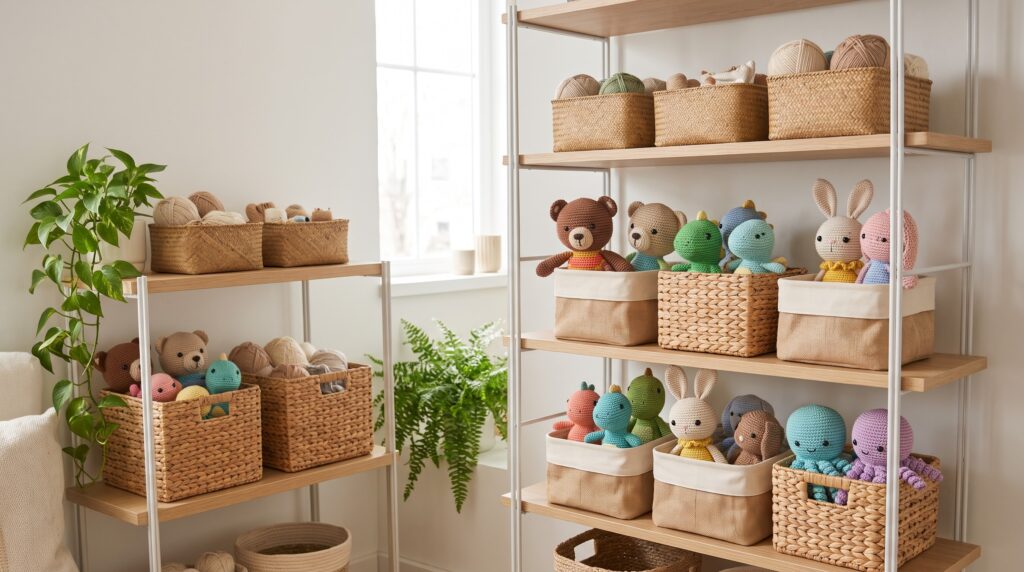
Storage conditions can significantly affect handmade projects.
Keep Them Away from Direct Sunlight
Long-term sunlight exposure may fade yarn colours.
Store toys away from strong direct light whenever possible.
Avoid Damp Environments
Moisture can create unpleasant odours and damage stuffing materials.
Choose a cool, dry storage space.
Use Breathable Containers
Fabric storage bags and open shelves are often better than sealed plastic containers.
Proper airflow helps prevent moisture buildup.
What to Do if a Crochet Toy Gets Flattened
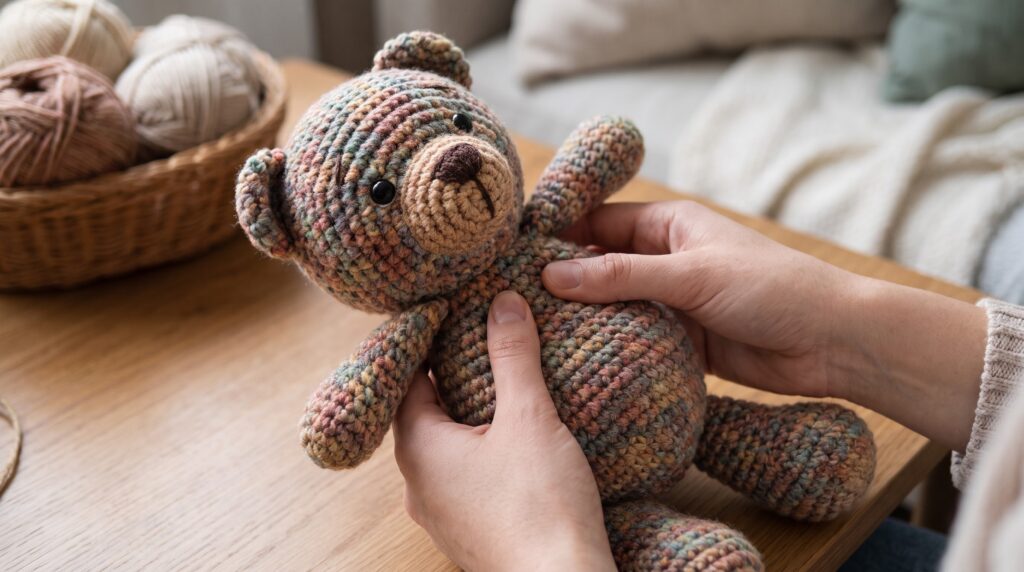
A flattened toy is not necessarily ruined.
Often the stuffing has simply shifted.
Try:
- Massaging the body gently.
- Redistributing stuffing.
- Adding a small amount of extra fiberfill if needed.
- Reshaping the project by hand.
Many toys recover surprisingly well after a little adjustment.
Caring for Safety Eyes and Embroidered Details
Safety eyes and embroidered facial features deserve special attention.
Before washing:
- Check for loose threads.
- Examine eye attachments.
- Repair weak areas.
Early repairs are usually much easier than fixing damage later.
Common Care Mistakes to Avoid
Many problems occur because of simple mistakes.
Avoid:
- Hot water
- Harsh detergents
- High dryer heat
- Twisting wet toys
- Hanging heavy toys to dry
- Long exposure to sunlight
Small changes in care habits can greatly extend the life of a handmade creation.
Final Thoughts
Every crochet toy represents time, creativity, and care. Whether you make amigurumi for yourself, your family, or your readers, proper maintenance helps preserve both the appearance and structure of handmade projects.
A few extra minutes spent washing and storing crochet toys correctly can keep them looking beautiful for years. By choosing gentle cleaning methods, reshaping after washing, and storing projects thoughtfully, you can protect the effort that went into every stitch.
FAQ
Can crochet toys go in the washing machine?
Some can, but hand washing is usually the safest option.
How do I stop my amigurumi from becoming flattened?
Use quality stuffing and reshape the toy while it dries.
Can I use hot water on crochet toys?
No. Cool or lukewarm water is generally safer.
Why does my crochet toy smell after washing?
The stuffing may not have dried completely.
How should I store crochet toys long term?
Keep them in a dry place away from direct sunlight and excess moisture.

Yorum gönder