Best Yarns for Amigurumi – Complete Guide for Beginners
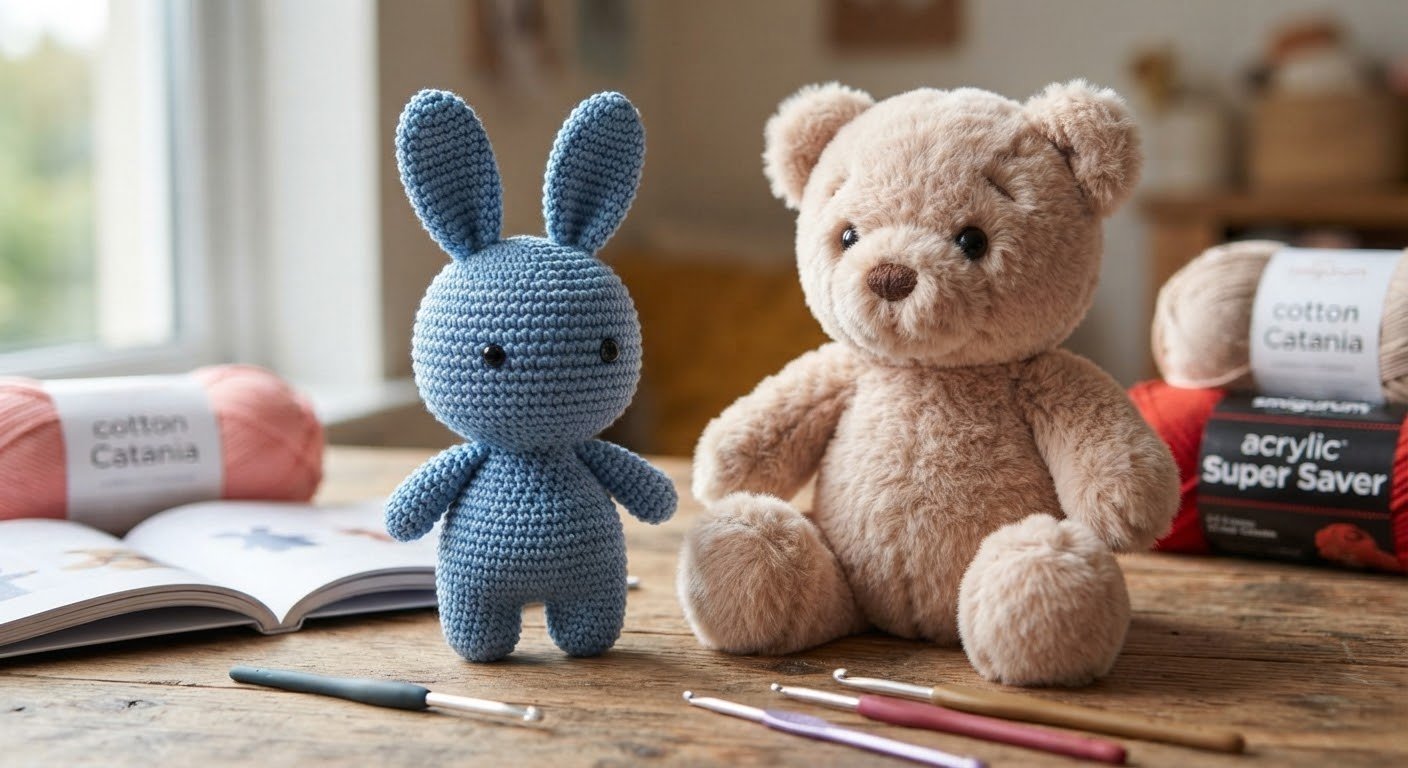
Choosing the right yarn can make a big difference in an amigurumi project. The yarn you use affects not only the size of the finished toy, but also how clearly the stitches show, how firm the fabric becomes, how much stuffing is needed, and how easy the piece is to shape.
For small amigurumi and keychains, smooth cotton yarn is often a practical choice because the stitches are easy to see and the finished piece can hold a firm shape. Acrylic yarn can be useful when you want a softer feel or are making a larger toy. Chenille and velvet yarns are another option when the goal is a soft, plush finish, although they can be more difficult to work with because the stitches are harder to see.
There is no single “best” yarn for every amigurumi. The right choice depends on the size of the project, the amount of detail, the shape you want to create, your crochet tension, and how the finished toy will be used.
In this guide, we’ll compare cotton, acrylic, blended, wool, and plush-style yarns and look at yarn weight, hook size, stitch definition, stretch, texture, and care. You’ll also find practical tips for choosing a yarn when you want to substitute a different brand or make an amigurumi in a different size.
What to Look for in Amigurumi Yarn
When choosing yarn for amigurumi, it helps to look beyond the color and thickness. The way a yarn behaves while you crochet can affect the shape, firmness, stitch definition, and overall appearance of the finished toy.
Before starting a project, consider these factors.
Fiber Content
The fiber affects how the yarn feels in your hands and how the finished amigurumi behaves.
Cotton yarn is often chosen for small amigurumi because it usually has good stitch definition and creates a firm fabric. Acrylic yarn can feel softer and may be more comfortable for larger projects. Cotton-acrylic blends can offer a balance between structure and softness.
Plush, chenille, and velvet-style yarns behave differently from smooth cotton or acrylic. They can create a very soft finished toy, but the fuzzy surface can make individual stitches harder to see.
Yarn Weight
Yarn weight refers to the thickness of the yarn and has a direct effect on the finished size of your amigurumi.
Sport and DK weight yarns are commonly used for small and medium-sized projects. Thicker yarns such as worsted or bulky yarn can create larger amigurumi with a softer, more substantial appearance.
If you substitute a different yarn weight, do not expect the finished toy to remain the same size. The number of stitches may stay exactly the same while the finished piece becomes noticeably larger or smaller.
Always check the pattern instructions before changing yarn weight.
Stitch Definition
Clear stitch definition is especially important when making amigurumi.
Most amigurumi are worked with tight single crochet stitches, increases, and decreases. A smooth yarn makes these stitches easier to identify, which can be helpful when counting rounds or working small details.
If you are a beginner, a smooth cotton or acrylic yarn is usually easier to read than a highly textured or fuzzy yarn.
Stretch
Different yarns stretch by different amounts.
A small amount of flexibility can make crocheting more comfortable, but excessive stretch may make it harder to maintain a firm amigurumi fabric. This becomes particularly noticeable when you add stuffing.
If the fabric stretches significantly and large gaps appear between the stitches, try using a smaller hook or choosing a yarn with less stretch.
Texture
The surface texture of the yarn affects both the crocheting process and the appearance of the finished toy.
Smooth yarn is generally easier to use for detailed amigurumi because you can clearly see where to insert the hook. Fuzzy, fluffy, chenille, and velvet yarns can hide the stitches, making counting and correcting mistakes more difficult.
Textured yarn can still be an excellent choice when you specifically want a soft or plush finish. It may simply require more attention while crocheting.
Yarn Construction
The way a yarn is spun can also affect how easy it is to crochet.
Some yarns are tightly twisted and hold together well when you insert the hook. Others may split easily, especially when using a small hook for amigurumi.
If your hook keeps catching individual strands instead of the whole yarn, the problem may be the yarn construction rather than your crochet technique.
For small, detailed projects, a smooth yarn that does not split easily can make the work much easier.
Washability
If your finished amigurumi will be handled frequently, washability is worth considering before choosing the yarn.
Check the care instructions on the yarn label rather than assuming that all yarn made from the same fiber should be washed in the same way. Different yarn constructions and blends can have different care requirements.
For children’s toys, also consider whether the finished amigurumi will have small detachable parts such as safety eyes, buttons, or decorative accessories.
Color and Contrast
Color can affect how easily you see your stitches while crocheting.
Very dark yarns can make individual stitches difficult to identify, especially when working with a small hook. Black, navy, and very dark brown yarn may require brighter lighting and more attention when counting stitches.
Light or medium colors are often easier for beginners to work with because the individual loops are more visible.
When a pattern contains many increases, decreases, or small details, choosing a color with good stitch visibility can make the project easier to follow.
How the Yarn Will Be Used
Think about the purpose of the finished amigurumi before choosing the yarn.
For example, a small keychain may benefit from a smooth yarn that holds its shape well. A decorative flower may need a yarn that keeps the petals defined. A large stuffed animal may be more suitable for a soft acrylic or plush-style yarn.
The best yarn is therefore not simply the softest or most expensive option. It is the yarn that works well for the size, structure, details, and finish you want.
A small test piece can be useful if you are unsure. Crochet a few rounds with the yarn and hook you plan to use, then check whether the stitches are easy to see and whether the fabric is firm enough for stuffing.
Cotton Yarn for Amigurumi
Cotton is one of the most commonly used yarns for amigurumi, especially for small and detailed projects. Its relatively firm structure and clear stitch definition make it easier to see individual stitches while working.
Cotton can be a particularly useful choice when the shape of the finished amigurumi matters. A tightly crocheted cotton fabric tends to hold its form well, which is helpful for small animals, keychains, flowers, and other designs with clearly defined parts.
Advantages of Cotton Yarn
- Clear stitch definition, which makes rounds easier to count
- Usually creates a firm fabric when worked with a suitable hook
- Holds small shapes and details well
- Available in many colors
- Works well for small toys, keychains, flowers, and decorative amigurumi
- Available in different weights, from fine yarns to thicker options
Things to Consider When Using Cotton
Cotton does not have the same amount of stretch as many acrylic yarns. This can be an advantage when you want a firm shape, but it can also make tight crocheting feel harder on your hands.
This is especially noticeable when using a small hook and tight tension. If you find that your hand becomes tired quickly, try relaxing your tension slightly or using a hook that is a little larger, provided that the resulting fabric is still firm enough for the project.
Cotton can also show tension differences quite clearly. If some stitches are tighter than others, the surface of a small amigurumi may look uneven. Working slowly and keeping your tension as consistent as possible can help.
Cotton Yarn and Stuffing
The firmness of cotton makes it suitable for stuffed amigurumi, but the hook size still matters.
If the hook is too large for the yarn and your tension, the stitches may leave visible gaps when you add stuffing. If the hook is too small, the fabric can become extremely tight and difficult to work.
Instead of choosing the smallest possible hook, aim for a fabric that is firm enough that the stuffing does not show through the stitches.
When Cotton Is a Good Choice
Cotton is a practical option when you want:
- Clearly visible crochet stitches
- A firm and structured shape
- Small details to remain defined
- A neat surface for embroidered features
- A suitable yarn for small amigurumi and keychains
For a small amigurumi that contains several increases, decreases, embroidered details, or tiny parts, smooth cotton can make the pattern easier to follow and the finished piece easier to shape.
However, cotton is not automatically the best choice for every project. If your priority is a very soft, squishy, or plush texture, another type of yarn may be more suitable.
Acrylic Yarn for Amigurumi
Acrylic yarn can be a useful choice for amigurumi when you want a softer feel, a lightweight finished toy, or a larger plush-style project. It is available in many colors and thicknesses, so it can be easy to find an acrylic yarn that suits a particular design.
Compared with cotton, acrylic often feels more flexible while crocheting. This can make it comfortable for longer projects, although the exact behavior depends on the yarn itself.
Advantages of Acrylic Yarn
- Soft and lightweight
- Available in many colors
- Available in a wide range of yarn weights
- Often comfortable to crochet with for longer projects
- Useful for larger amigurumi and plush-style designs
- Can be a practical option when you want a softer finished texture
Things to Consider
Not all acrylic yarns behave in the same way. Some have good stitch definition, while others are softer and slightly more difficult to read when working small stitches.
Acrylic can also have more stretch than a firm cotton yarn. When making a stuffed amigurumi, this means the fabric may expand as you add stuffing. If the stitches become too open, try a smaller hook or choose a yarn with less stretch.
Another thing to consider is the surface of the yarn. Smooth acrylic is generally easier to work with than very fluffy or textured acrylic when a pattern contains many small details.
Acrylic for Larger Amigurumi
Acrylic can work particularly well for larger amigurumi because it is available in thicker weights and can feel softer than tightly crocheted cotton.
If you are making a large stuffed animal, a thicker acrylic yarn can help you achieve a larger finished piece without having to work with extremely small stitches.
Keep in mind that changing to a thicker yarn will also change the amount of stuffing required and may alter the proportions of the finished design.
Acrylic for Beginners
A smooth, medium-weight acrylic can be a comfortable starting point for someone learning amigurumi. It can be easier on the hands than very firm cotton when practicing repeated single crochet stitches.
However, beginners should avoid choosing a very fuzzy acrylic for their first detailed project. If you cannot clearly see where each stitch begins and ends, counting rounds and finding the correct stitch can become unnecessarily difficult.
For a first amigurumi, choose a smooth yarn in a light or medium color if possible. This makes the stitches easier to see while you learn to maintain consistent tension.
When Acrylic Is a Good Choice
Acrylic can be a practical option when you want:
- A softer finished toy
- A lightweight amigurumi
- A larger or plush-style project
- Comfortable yarn for a longer crochet session
- A wide selection of colors and yarn weights
As with cotton, the best choice depends on the particular yarn rather than the fiber name alone. Check the yarn label, feel the yarn if possible, and consider how clearly the stitches can be seen before starting the complete project.
Cotton-Acrylic Blend Yarn
Cotton-acrylic blends can be a useful middle ground when you want some of the structure of cotton together with the softer feel of acrylic.
However, the word “blend” does not describe how every yarn will behave. A yarn containing a higher percentage of cotton may feel quite different from one containing mostly acrylic. The way the fibers are spun together can also affect stitch definition, stretch, and texture.
Advantages of Blended Yarn
- Can combine firmness with softness
- Often comfortable to crochet with
- Available in many colors and yarn weights
- Can work well for small and medium-sized amigurumi
- May be a useful alternative when 100% cotton feels too firm or acrylic feels too stretchy
What to Check Before Choosing a Blend
Look at the fiber percentages on the yarn label rather than assuming that all cotton-acrylic blends behave similarly.
Also compare the yarn weight with the pattern recommendation. Two blended yarns can contain the same fibers but have different thicknesses, which can result in different finished sizes.
Pay attention to stretch as well. If the yarn feels very flexible in your hands, make a small test piece before starting the complete amigurumi. The fabric should be firm enough to hold the shape and contain the stuffing without large gaps.
When a Blend Can Be Useful
A cotton-acrylic blend can be a practical choice when you want a balance between stitch definition and softness.
For example, it can work well for an amigurumi that needs recognizable small details but does not need the very firm feel of tightly crocheted cotton.
It can also be useful when you already have a particular yarn available and want to substitute it for the yarn listed in a pattern. In that situation, compare the fiber content, yarn weight, recommended hook size, and thickness rather than relying only on the yarn’s name.
Always check the care instructions on the label. The finished amigurumi should be cared for according to the instructions for the specific yarn you used.
Common Yarn Weights for Amigurumi
Yarn weight describes the thickness of the yarn. In amigurumi, changing the yarn weight can have a noticeable effect on the finished project.
A thicker yarn will generally produce a larger amigurumi when the same pattern is followed. A thinner yarn will usually create a smaller piece. The change is not limited to size, though. The fabric can also feel different, the stitches may look more or less defined, and you may need a different amount of stuffing.
For this reason, yarn weight should be considered together with hook size and crochet tension.
Fingering or Fine Weight
Fine yarn can be useful for very small amigurumi, miniature designs, and detailed keychains.
Because the stitches are small, these projects can take more concentration to crochet. A small hook is usually needed, and the finished piece can have a delicate appearance.
Fine yarn is a good option when you specifically want a small finished size, but it may not be the easiest choice for a beginner who is still learning to recognize individual stitches.
Sport Weight
Sport weight yarn is relatively thin and works well for small amigurumi and projects with detailed parts.
It can provide clear stitches without producing a very large finished toy. Sport-weight cotton is also commonly used for small animals, flowers, keychains, and other compact designs.
When working with sport weight, use a hook that creates a firm fabric rather than choosing a hook size based only on the yarn label.
DK Weight
DK weight yarn is a versatile choice for many small and medium-sized amigurumi.
It is thick enough to produce a comfortable-to-handle project while still allowing you to work reasonably small details. DK yarn can be especially convenient when you want a finished toy that is larger than a miniature amigurumi but smaller than a large plush.
Worsted or Aran Weight
Worsted and Aran weight yarns are thicker and can be useful for medium and larger amigurumi.
The larger stitches can make the project work up faster, but they can also make small details look different. If you use a worsted-weight yarn for a pattern designed for sport or DK yarn, expect the finished amigurumi to be larger.
Bulky Weight
Bulky yarn is useful when you want a large, chunky, or plush-looking amigurumi.
The stitches are much larger, so small increases, decreases, and facial details may have a different appearance than they would with thinner yarn.
Bulky yarn can also require more stuffing because the finished project is usually larger. Check the firmness of the fabric carefully as you work so that the stuffing does not show through the stitches.
What Happens When You Change Yarn Weight?
Changing yarn weight can change more than the final dimensions.
For example, if a pattern is written for DK yarn and you use bulky yarn while keeping the same number of stitches and rounds, the finished amigurumi will generally be larger. The openings between stitches may also behave differently, and small features may appear proportionally smaller.
If you want to make a pattern smaller, using a thinner yarn can work, but it is important to consider whether the details will still be practical to crochet.
When substituting yarn, compare the thickness of the new yarn with the original rather than relying only on the name of the yarn weight. Yarn labels can vary between brands and countries.
If the exact finished size matters, make a small test section first. This gives you an opportunity to check the fabric, stitch definition, and tension before committing to the complete project.
Choosing the Right Crochet Hook
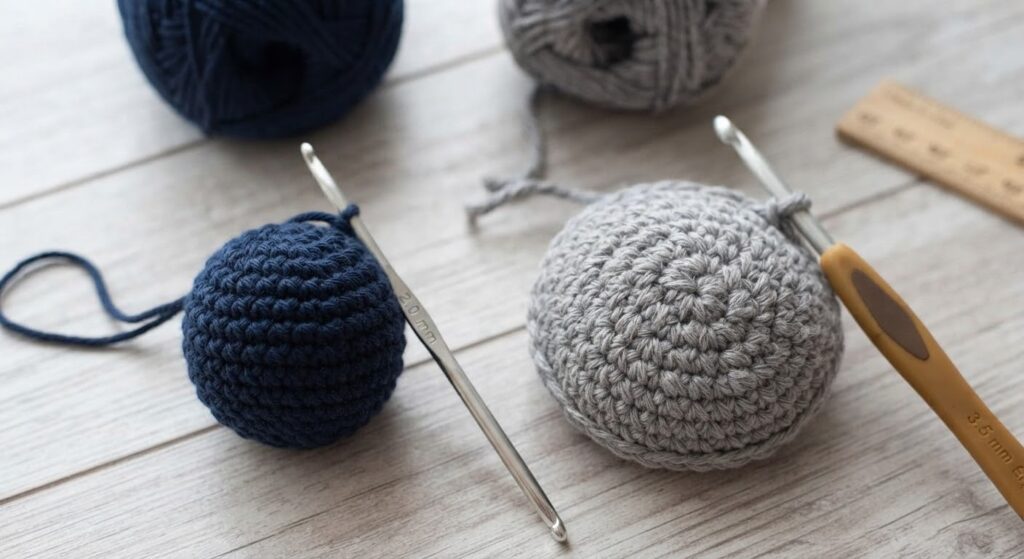
The crochet hook affects the firmness, stitch definition, and finished size of your amigurumi. A smaller hook than the one suggested on the yarn label is often used to create a firm fabric with small spaces between the stitches.
There is no single hook size that works for every yarn. Your yarn thickness, crochet tension, and the design of the project all affect which hook will work best.
How to Choose a Hook
If your pattern specifies a hook size, start with that recommendation. After crocheting a few rounds, check the fabric:
- If you can see large gaps between stitches or the stuffing shows through, try a smaller hook.
- If the stitches are extremely difficult to work into or your hands feel strained, try a slightly larger hook.
- If the fabric is firm, the stitches are easy to count, and you can crochet comfortably, the hook is likely suitable.
The aim is to create a firm fabric without making the stitches unnecessarily difficult to work.
Yarn Weight and Hook Size Guide
| Yarn Weight | Common Amigurumi Hook Range | Typical Use |
| Fingering / Fine | 1.75–2.25 mm | Mini and small amigurumi |
| Sport | 2.0–2.5 mm | Small amigurumi and detailed projects |
| DK / Light Worsted | 2.5–3.0 mm | Small to medium amigurumi |
| Worsted / Aran | 3.0–3.75 mm | Medium and larger amigurumi |
| Bulky | 4.0–5.0 mm | Large or chunky amigurumi |
These ranges are starting points, not fixed rules. For example, DK-weight cotton yarn may work well with a 2.5–3.0 mm hook, while sport-weight yarn may suit a 2.0–2.5 mm hook. Always check the fabric you produce rather than relying on the label alone.
Why Hook Size Matters for Stuffing
As you fill an amigurumi with fiberfill, the crochet fabric can stretch slightly. If the stitches are too loose, the stuffing may push through the gaps. A smaller hook can help create a denser fabric, but one that is too small can make crocheting uncomfortable and difficult.
Before starting a large project, test the first few rounds. Check that the stitches are easy to identify, the stuffing will not show through, and the hook moves through the stitches without excessive force. If needed, adjust the hook by 0.25–0.5 mm and test again.
How Hook Size Affects Finished Dimensions
Using a larger hook with the same yarn and pattern will generally produce a larger amigurumi, while a smaller hook usually creates smaller, tighter stitches. Your tension also affects the final dimensions.
If you want your finished piece to be close to the size specified in a pattern, use the recommended yarn and hook as a starting point and keep your tension as consistent as possible.
Popular Yarn Options for Amigurumi
There are many yarn brands that can work well for amigurumi. The most important thing is not the brand name itself, but whether the yarn’s weight, fiber content, thickness, and texture are suitable for your project.
Some commonly used options include:
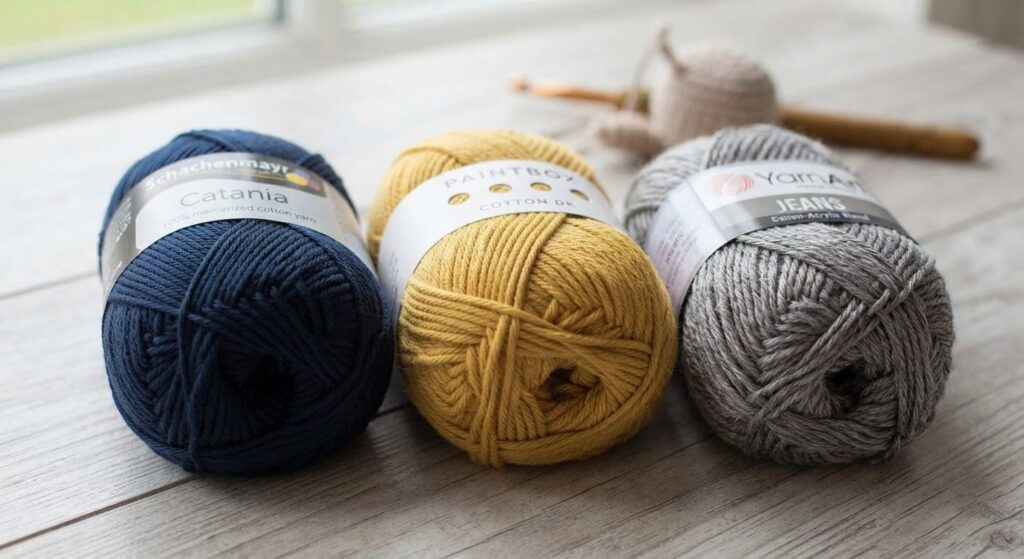
- Schachenmayr Catania
- YarnArt Jeans
- Paintbox Cotton DK
- Red Heart Super Saver
- Lion Brand Vanna’s Choice
- DROPS Cotton Light
- Rico Creative Cotton Aran
These yarns are not identical. They differ in fiber content, thickness, texture, color selection, and price, so it is worth checking the label before choosing one for a pattern.
What to Compare Between Yarns
When substituting one brand for another, compare more than the yarn weight written on the label.
Check:
- Fiber content
- Yarn weight
- Length per ball or skein
- Recommended hook size
- Thickness
- Amount of stretch
- Surface texture
- Care instructions
Two yarns can both be described as DK weight but still produce different results. One may be slightly thicker, softer, or more tightly spun than the other.
For amigurumi, these differences can affect the finished size and how clearly the stitches appear.
Can You Substitute Another Yarn Brand?
Yes. You do not always need to use the exact brand named in a pattern.
A suitable substitute should be reasonably similar in thickness and should produce a fabric that works for the project. Fiber content is also worth considering because cotton, acrylic, and blended yarns can behave differently even when they have a similar weight.
If the finished size is important, make a small test section before starting the entire amigurumi.
Do Not Choose Yarn by Weight Alone
The yarn weight category is useful, but it does not tell you everything about how a yarn will behave.
For example, two sport-weight yarns may have different amounts of stretch or different surface textures. One may make the stitches easy to see, while another may feel softer and slightly more difficult to work with.
When possible, look at the actual yarn, check the label specifications, and consider how the yarn will work with the hook size you plan to use.
For small and detailed amigurumi, stitch visibility can be more important than choosing the most popular brand.
Buying Yarn for Amigurumi
If you are buying yarn specifically for an amigurumi project, it can be useful to buy enough of the main color at the same time.
Different dye lots can sometimes have slight color differences. This may be difficult to notice on a small ball of yarn but become more obvious when two pieces of the same amigurumi are made from different dye lots.
For small projects, also consider how much yarn you actually need. Buying a very large quantity simply because the yarn is available in a particular size may not be necessary.
If you plan to make several amigurumi in the same style, keeping a few basic colors on hand can make future projects easier.
The best yarn choice is ultimately the one that gives you the fabric, stitch definition, softness, and finished size you want for the particular project.
Practical Tips for Choosing Amigurumi Yarn
Choosing yarn becomes easier once you know what to check before you start. These simple steps can help you avoid changing yarn halfway through an amigurumi project.
Read the Pattern First
If you are following an existing pattern, check the recommended yarn weight, fiber, and hook size before choosing a substitute.
Do not assume that a yarn with a similar name will produce the same result. The thickness and construction of the yarn can affect the finished size and stitch appearance.
Look at the Yarn Label
The yarn label can provide useful information before you begin.
Check the fiber content, yarn weight, length, recommended hook size, and care instructions. If you are comparing two possible yarns, looking at these details side by side can make the choice easier.
Think About the Finished Toy
Consider how you want the amigurumi to look and feel.
For a small, detailed animal or keychain, you may prefer a smooth yarn with clear stitch definition. For a large plush toy, a softer or thicker yarn may be more suitable.
The intended use also matters. A decorative amigurumi may have different yarn requirements from a toy that will be handled frequently.
Check the Color Before Starting
Very dark yarn can make small stitches difficult to see. If you are still learning amigurumi, a lighter or medium-colored yarn can make counting stitches easier.
If you need black or another dark color for details, consider using good lighting while crocheting.
Test the Yarn With Your Hook
If you are unsure whether a yarn will work, crochet a few rounds before beginning the complete project.
Look at the fabric from different angles and check whether the stitches remain closed when you gently stretch the piece.
For stuffed amigurumi, the fabric should be firm enough that the stuffing does not become visible through large gaps.
Check the Yarn While You Crochet
Do not wait until the amigurumi is finished to decide whether the yarn is suitable.
As you work, check whether the stitches are easy to identify, whether the fabric is becoming too loose, and whether the yarn is splitting or causing difficulty with the hook.
If something feels wrong during the first few rounds, it is usually easier to adjust the hook size or yarn at that stage than after completing the whole project.
Keep Extra Yarn for Small Details
Amigurumi often uses several small pieces such as ears, arms, leaves, tails, or facial details.
If the main color is difficult to replace, keeping a little extra yarn can be useful. This is especially important when making two matching pieces, such as a pair of ears or two identical keychains.
Do Not Judge a Yarn Only by Its Softness
A very soft yarn is not necessarily the easiest yarn for amigurumi.
Softness, stitch definition, stretch, thickness, and durability all affect how suitable a yarn is for a particular project.
For detailed amigurumi, a yarn that makes the stitches easy to see may be more useful than one that simply feels softer in your hands.
Keep Your Crochet Tension in Mind
The same yarn can produce different results for different crocheters.
If you naturally crochet loosely, you may need a smaller hook to create a firm amigurumi fabric. If you crochet very tightly, a slightly larger hook may be more comfortable.
There is no universal hook size that works perfectly for every crocheter. The finished fabric is more important than following a number without checking the result.
Frequently Asked Questions
Can I use wool yarn for amigurumi?
Yes. Wool can be used for amigurumi, especially when you want a natural fiber and a different texture from cotton or acrylic.
Keep in mind that wool can vary considerably in softness, stretch, and care requirements. Some wool yarns are also more likely to felt or change shape when washed.
Before using wool for a particular pattern, check its thickness, stitch definition, stretch, and care instructions.
Is cotton or acrylic better for amigurumi?
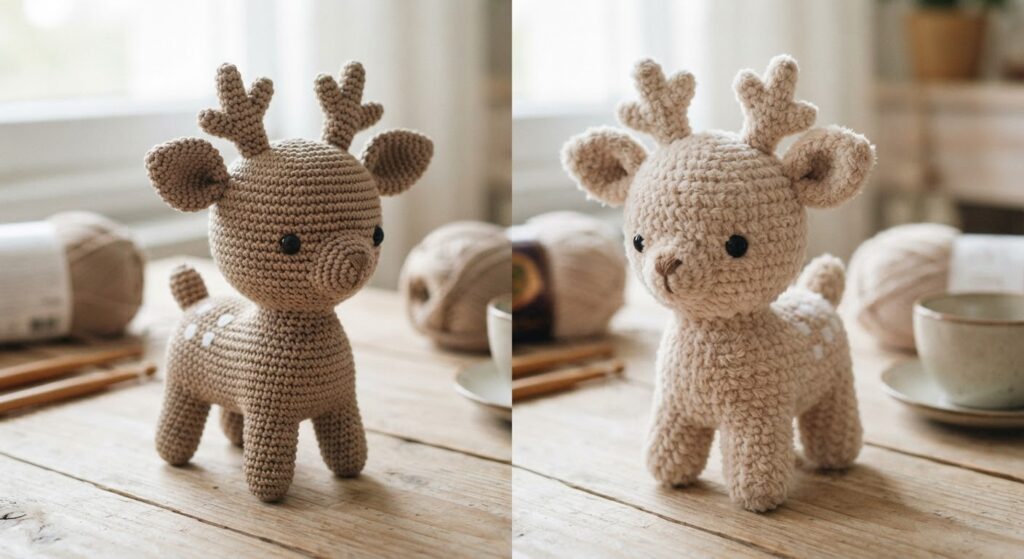
Both can work well, but they produce different results.
Cotton is often a good choice when you want clear stitch definition and a firm, structured fabric. Acrylic can be useful when you prefer a softer feel or are making a larger plush-style project.
Instead of choosing one fiber as universally “better,” consider the size, details, texture, and finished shape you want.
Can I use chenille or velvet yarn for amigurumi?
Yes. Chenille and velvet-style yarns are popular for soft, plush amigurumi.
They can create a very soft finished toy, but their fuzzy surface can make individual stitches difficult to see. This can make counting rounds, finding increases and decreases, and correcting mistakes more challenging.
If you are new to amigurumi, smooth cotton or acrylic may be easier to learn with. Once you are comfortable reading your stitches, plush yarn can be a useful option for larger, soft projects.
How much yarn do I need for one amigurumi?
The amount depends on the finished size, yarn weight, stitch pattern, crochet tension, and how much of each color is used.
A small keychain may require only a small amount of yarn, while a large stuffed animal can use much more.
When a pattern provides a yarn quantity, use that as your starting point. If you are changing yarn weight or making the design larger, expect the amount of yarn required to change as well.
Can I mix different yarn types in one amigurumi?
You can, but differences in thickness, stretch, and texture can affect the finished piece.
If you combine different yarns, try to choose materials that are reasonably similar in thickness. Also consider where each yarn will be used. A smooth cotton body combined with a fluffy yarn for a small decorative part can produce a different result from using the same yarn throughout the entire project.
Testing the combination before making the complete piece can help you decide whether the textures and proportions work together.
Why does my amigurumi look larger than the pattern?
Changing the yarn weight, hook size, or crochet tension can change the finished size.
A thicker yarn generally produces a larger piece, while a larger hook can create larger stitches. Loose tension can also make the finished amigurumi bigger than expected.
If you want to stay close to the original dimensions, use a similar yarn weight and hook size and try to maintain consistent tension.
Why can I see the stuffing through my amigurumi?
Visible stuffing usually means that the crochet fabric has openings that are too large for the amount of stuffing being used.
This can happen when the hook is too large, the yarn is very stretchy, or your tension is loose.
Try using a smaller hook and check the fabric before adding more stuffing. You should be able to fill the amigurumi firmly without stretching the stitches so much that large gaps appear.
Should I use the hook size written on the yarn label?
Not necessarily.
The hook size printed on a yarn label is usually intended for general crochet use and may not produce a tight enough fabric for amigurumi.
Amigurumi often requires a smaller hook to create a firm fabric. However, the exact size depends on the yarn and your tension.
Use the pattern recommendation when available, then check the fabric as you crochet.
Can I use the same yarn for every amigurumi project?
You can use a favorite yarn for many projects, but it will not necessarily be the best choice for every design.
A smooth cotton may be excellent for a small detailed keychain but less suitable if you want a very soft, oversized plush toy. Similarly, a fluffy yarn may create a beautiful soft texture but make tiny details difficult to crochet.
Choosing yarn according to the specific project gives you more control over the finished result.
Choosing Yarn for Your Next Amigurumi
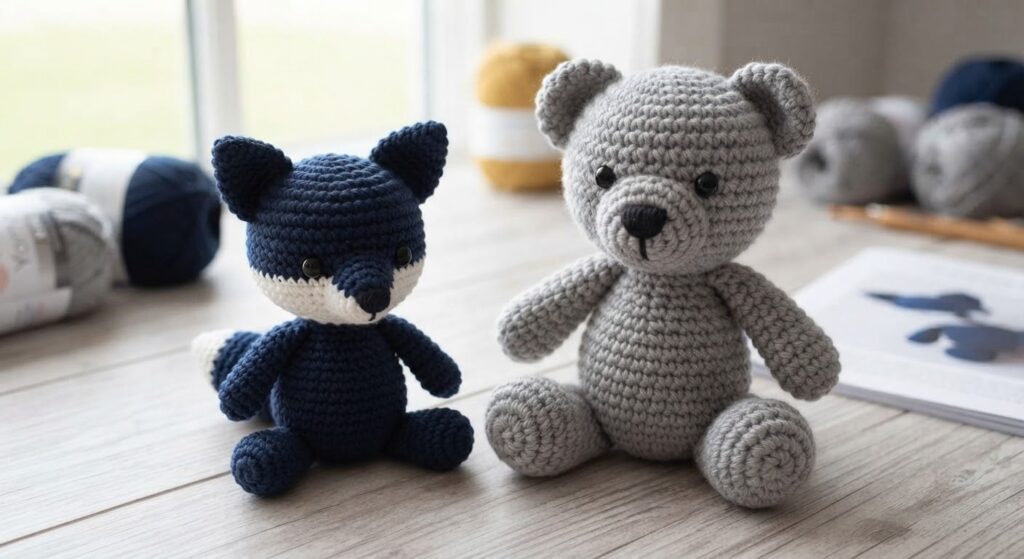
There is no single yarn that is perfect for every amigurumi project. The best choice depends on the size of the design, the amount of detail, the firmness of the fabric, and the texture you want in the finished piece.
Before starting, check the pattern’s recommended yarn weight and hook size. If you are using a different yarn, compare its thickness, fiber content, stretch, and texture with the original yarn.
For small and detailed amigurumi, a smooth yarn with clear stitch definition can make the project easier to crochet and shape. For larger or softer designs, acrylic, chenille, or other plush-style yarns may be more suitable.
Your crochet tension matters just as much as the yarn itself. If the fabric is too loose and the stuffing shows through, try a smaller hook. If the stitches are extremely difficult to work or the fabric becomes uncomfortably stiff, try a slightly larger hook.
When you are unsure about a yarn, crochet a small test section before starting the complete project. A few rounds are often enough to tell you whether the stitches are easy to see, whether the fabric is firm enough, and whether the yarn gives you the finish you want.
Once you understand how yarn fiber, weight, texture, stretch, hook size, and tension work together, choosing a suitable yarn becomes much easier—even when you need to substitute a different brand.

Yorum gönder